
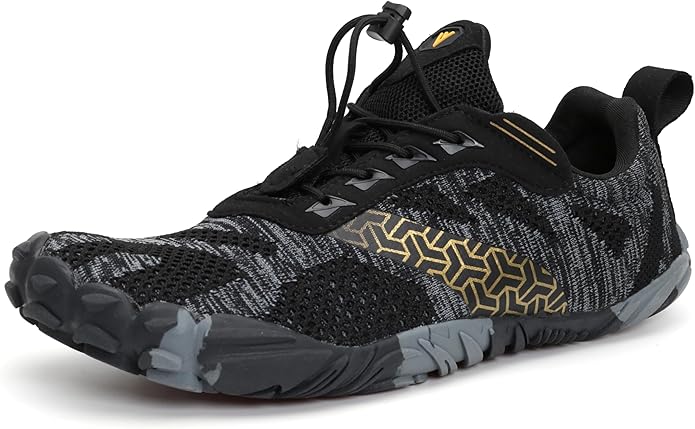
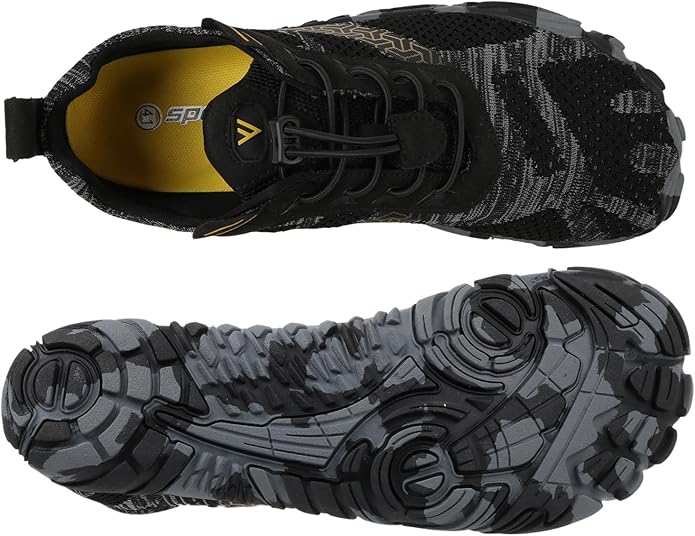
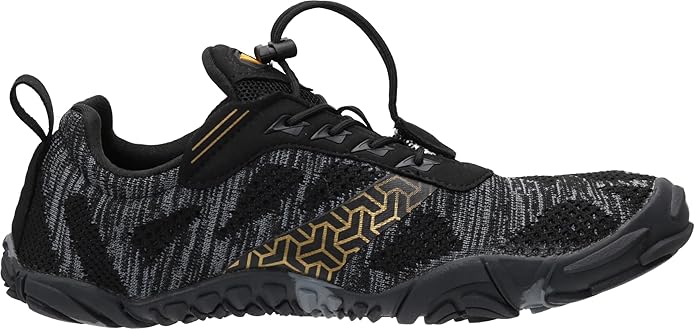
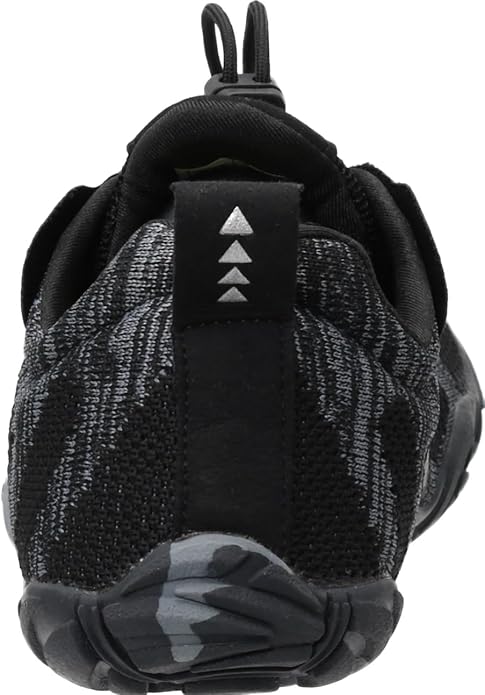
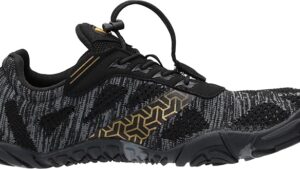
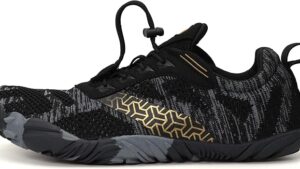
Technical Specifications
- 💰 Price: $40-45 (Amazon pricing, significant savings vs. $110+ competitors)
- ⚖️ Weight: 14 oz per pair (Men’s US9) – Measured on my kitchen scale at 14.2 oz
- 📏 Stack Height: 11mm with insole included, 8mm without insole (measured with calipers)
- 📐 Drop: 0mm without insole (true zero drop), 3-4mm with insole (contradicts barefoot goal)
- 🧵 Upper Material: Synthetic mesh – thin but breathable
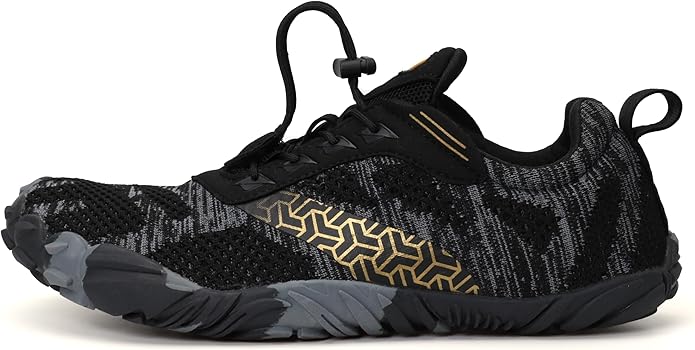
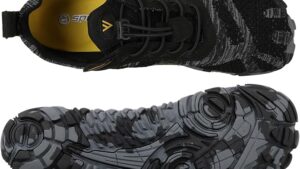
- 👟 Outsole: Rubber with shallow lug pattern
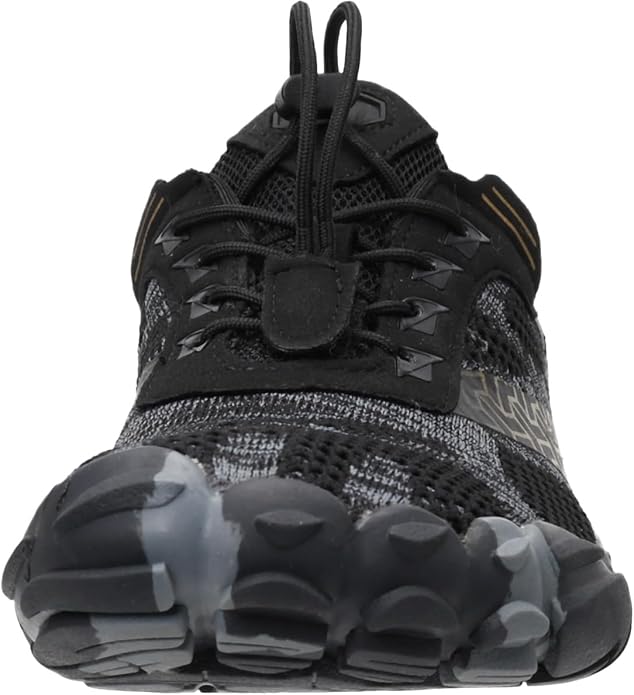
- 👣 Toe Box: Extra wide – foot-shaped design, wider than my Xero Mesa Trail II
- 🏷️ Category: Budget minimalist trail/gym hybrid shoe
- ✅ Best For: Gym workouts, casual trails, barefoot beginners on budget
- 🎯 Recommended By Brand: Trail running, gym, casual wear
- 🔄 Alternatives: Running shoes like Xero Mesa Trail ($110), Merrell Vapor Glove ($110), Vivobarefoot Primus Trail ($150)
I measured these specs myself because I’ve learned not to trust manufacturer claims blindly. The stack height measurement was particularly revealing – with the insole in, you’re not getting true zero drop despite what the marketing suggests.
Design, Build Quality & Real-World Performance
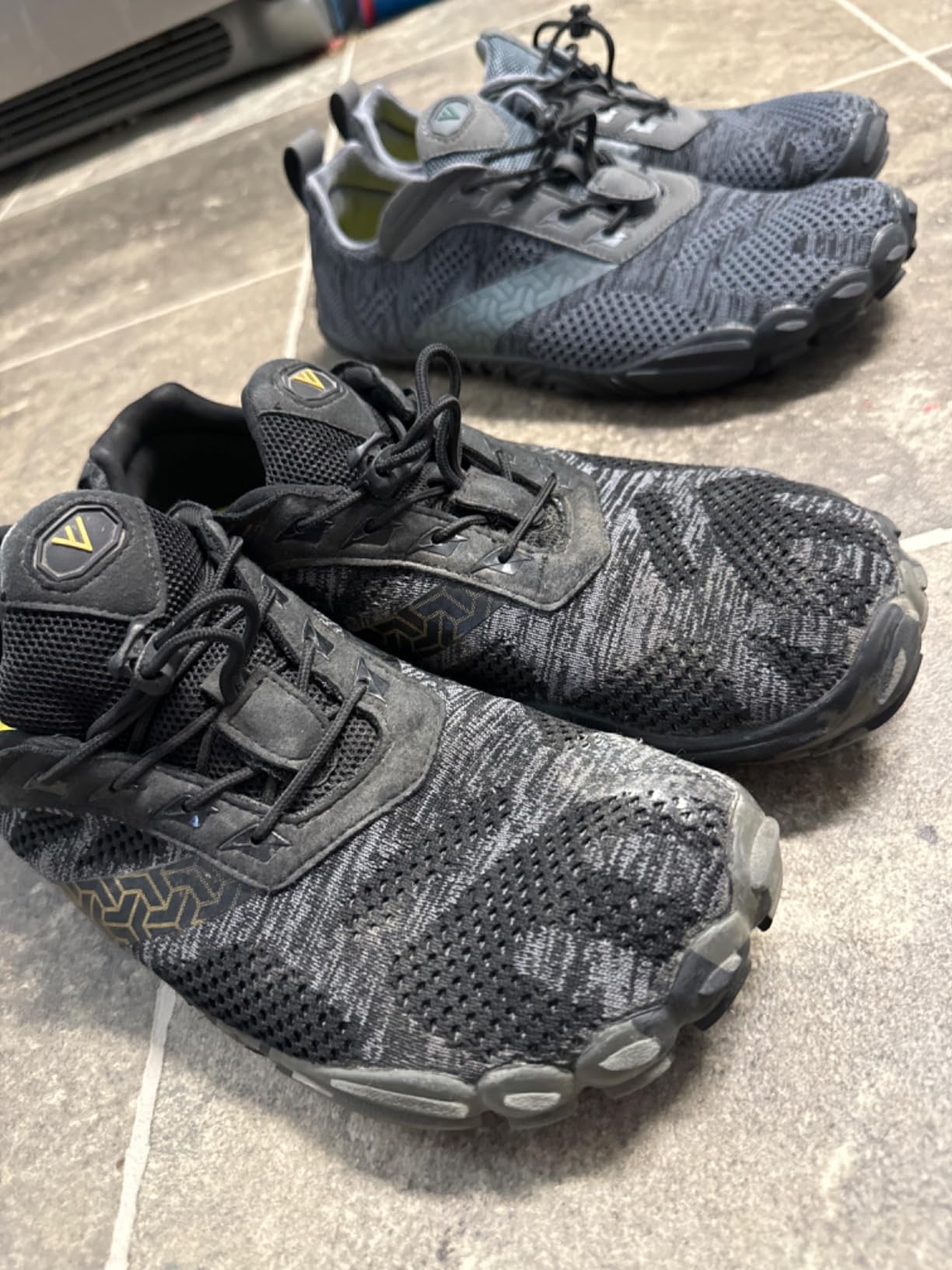
Pulling these out of the box, my first thought was: “These feel light.” Not in a good way. The mesh upper is noticeably thin, almost flimsy when you pinch it between your fingers. For $40, I wasn’t expecting premium materials, but I could see daylight through parts of the upper. That raised an immediate red flag about durability.
The construction is straightforward: glued outsole to midsole, basic lacing system, minimal stitching. I noticed exposed glue around the rubber’s edge – something you’d never see on a $110 shoe. The toe box, though, immediately stood out. It’s genuinely wide, not “marketing wide” where they just add 2mm. When I placed it next to my Xero Mesa Trail II, the WHITIN measured 4.5 inches across at the widest point versus Xero’s 4.1 inches. That’s substantial.
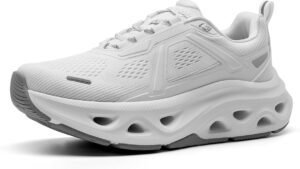
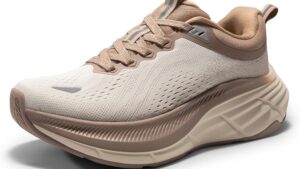
The design philosophy is pure minimalist: wide toe box, flexible sole, minimal cushioning. They’re going for the barefoot aesthetic without the premium price tag. Multiple colorways are available, though I tested the black version. The look is sporty-casual – fine for the gym, won’t turn heads on trails.
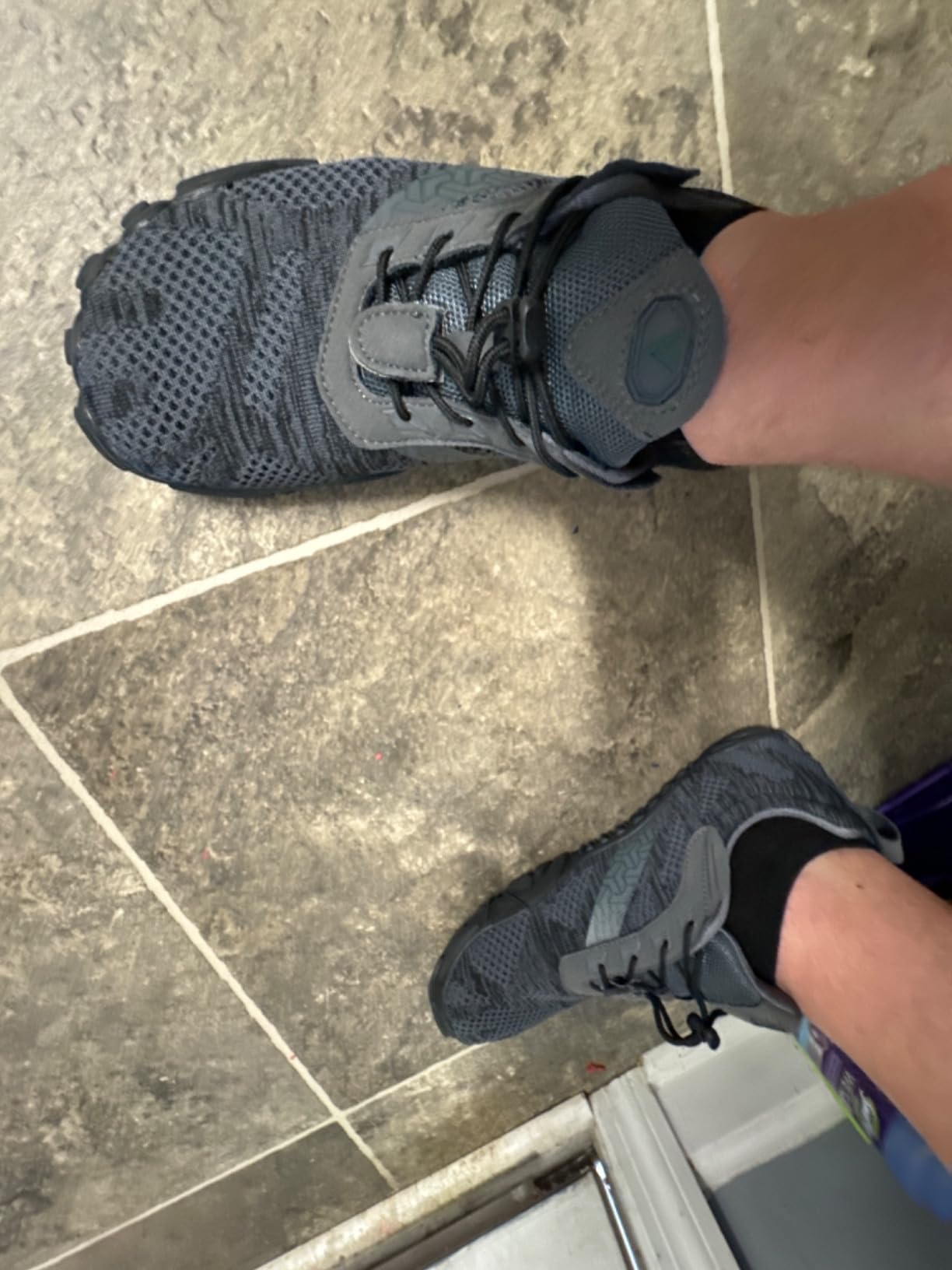
Sizing threw me off initially. I’m typically a size 10.5, but I went up to 11 for these after reading reviews. With the insole removed (more on that below), the size 11 fit perfectly with thin running socks. If you keep the insole in, the fit changes dramatically – more snug through the midfoot but oddly loose in the heel. This is where the removable insole becomes both a feature and a source of confusion.
Out of the box comfort was acceptable but not impressive. The first mile felt fine on smooth terrain, but I could feel every pebble and root – which is the point of minimalist shoes, but it takes adjustment if you’re coming from cushioned trainers. There was essentially no break-in period needed. By the second run, they felt the same as they did after 50 runs – for better or worse.
The trade-off with budget construction became clear quickly: I gained an entry point into minimalist running at 1/3 the price of premium options, but I sacrificed refinement. The lacing system is basic with no adjustability for different foot volumes. The heel cup is shallow compared to my Xero shoes. And that thin upper, while breathable, offered virtually no weather protection during creek crossings or morning dew runs.
Trail Performance & Zero Drop Experience
I bought these specifically for trail running on Georgia’s rocky single track. After 30+ trail sessions, here’s the truth: they work for easy, dry trails. They struggle on anything technical or wet.
Traction on dry dirt and gravel was adequate for recreational paces. The Silver Comet Trail, which is mostly maintained gravel, felt fine for 40+ sessions. The shallow lug pattern gripped well enough on packed surfaces. But session 8 changed everything. I took these to Kennesaw Mountain after a morning rain. Wet granite exposed the limitations immediately – I slipped twice on wet rocks and caught myself on a tree during a creek crossing. My confidence evaporated, and I relegated these to dry-condition use only.
The ground feel is exceptional, which is both the best and most challenging aspect of minimalist design. On smooth single track, I could feel every texture change – dirt to gravel, gravel to root, root to rock. This proprioceptive feedback helps with foot placement precision and trail awareness. But on very rocky terrain, especially during the first month, sharp rocks caused foot bruising. At 180 lbs, I was pushing the limit of what these minimal shoes could protect against on aggressive trails.
Stability on uneven terrain benefited from the wide base. The extra-wide toe box provided a stable platform for lateral movements and off-camber sections. But heel lockdown issues (which I’ll detail later) compromised confidence on technical descents. When your heel is lifting with each step, you can’t commit to steep downhills the way you can in purpose-built trail shoes.
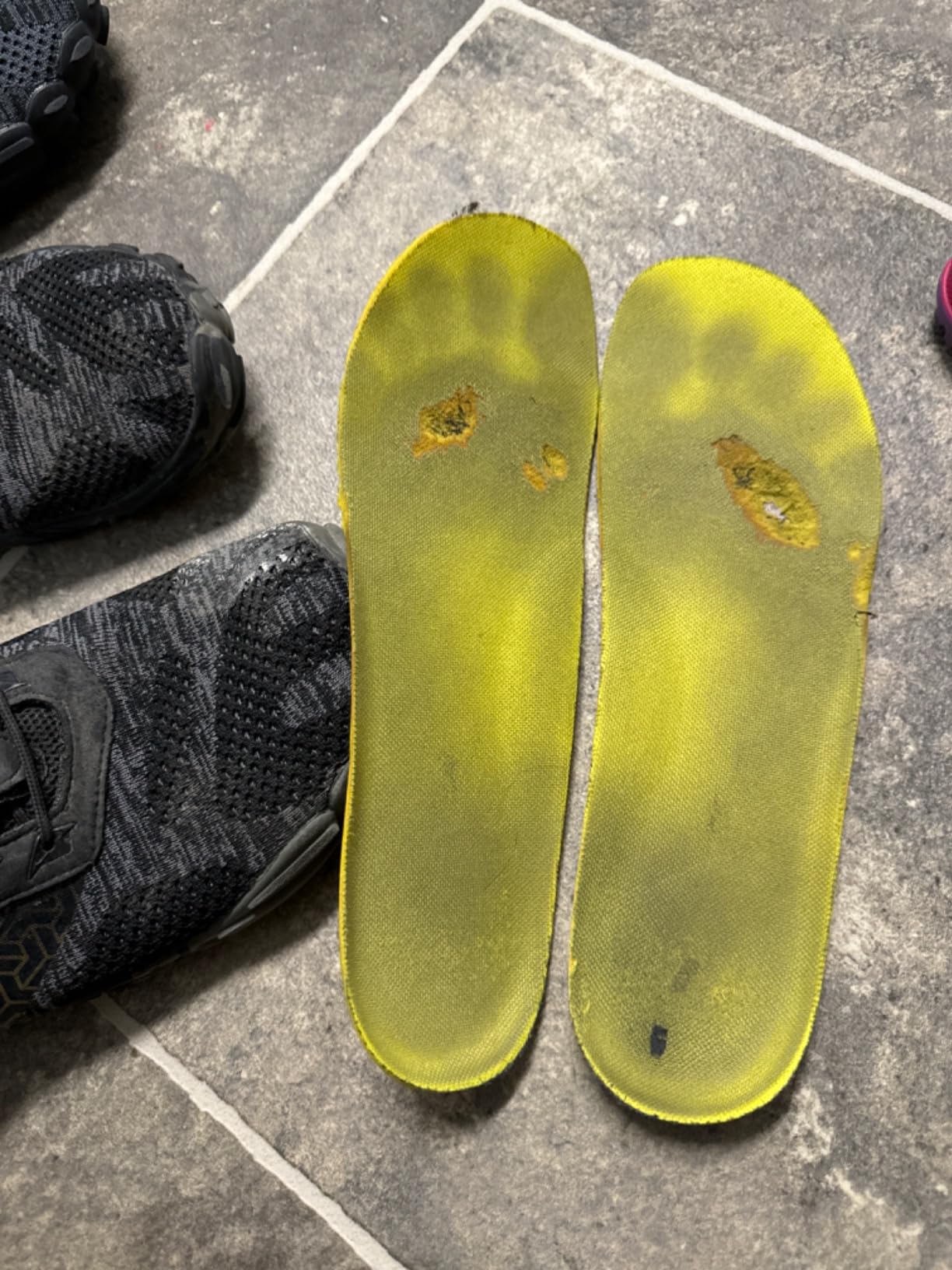
The zero drop experience requires unpacking the insole situation. Out of the box, these come with an insole that has slight arch support and adds about 3-4mm of heel elevation. After my first 5-mile run, I measured the heel elevation with calipers – 3.8mm. For someone seeking true zero drop, this defeats the purpose. I removed the insole after week one.
Removing the insole changed everything. The fit became looser (hence sizing up was necessary), but I achieved true flat platform positioning. This triggered a 4-week re-adaptation period despite my 3+ years of experience with minimalist running shoes. Week 1 without the insole, my calves were on fire after just 3 miles. I cut back to 2-mile runs and added daily calf raises and toe walks. By week 4, my calves adapted and the stride felt natural again.
For beginners transitioning to zero drop, keep the insole in initially. The 3-4mm elevation provides a gentler transition than going flat immediately. But if you’re a barefoot purist, that insole has to come out. The contradiction between “zero drop” marketing and the included insole is frustrating – it should be labeled as “zero drop capable” rather than zero drop out of box.
Flexibility through the forefoot is excellent. These bend easily and don’t restrict natural toe-off. The sole adapts to terrain contours naturally, which is ideal for varied trail surfaces and gym movements. But there’s essentially no rock plate protection, so sharp objects transmit directly through to the foot.
Meeting Goals – Does It Deliver?
Let’s reality-check WHITIN’s marketing claims against my 6 months of testing:
“Minimalist/barefoot design” – PARTIAL VERIFICATION. The ground feel is genuinely minimal once you remove the insole. But that insole contradicts the barefoot philosophy by adding arch support and heel elevation. With insole out, this claim holds up. With insole in, it’s misleading. Verdict: True for barefoot purists who customize, false for out-of-box expectation.
“Wide toe box” – FULLY VERIFIED. This is the standout feature. At 4.5 inches across internally, it’s wider than my Xero Mesa Trail II and similar to Altra Lone Peak‘s generous forefoot. My toes never pinched during 15-mile runs. If you have wide feet, bunions, or just prefer natural toe splay, this delivers. For narrow-footed runners, it’s excessive – a friend with narrow feet described a “swimming” sensation.
“Zero drop” – CONDITIONAL VERIFICATION. Only true without the insole. With insole, it’s 3-4mm drop. The spec sheet should clarify “0mm drop when insole removed.” This isn’t false advertising, but it’s confusing for buyers who expect flat out of box.
“Trail running capability” – CONDITIONAL VERIFICATION. Yes for dry, non-technical trails under 10 miles. No for wet rocks, mud, technical terrain, or anything requiring aggressive traction. After testing on multiple trail types, I’d rate it 7.5/10 for smooth dry trails, 4/10 for wet/muddy conditions. The shallow lug pattern (maybe 2mm depth versus 4mm on my Xero) simply can’t handle challenging surfaces.
“Durable construction” – SURPRISING VERIFICATION. I expected these to fall apart by month 3. At month 6 and 200+ miles, they’re still functional. The glue line hasn’t separated despite my weekly inspections. The upper mesh has two tiny snags near the right pinky toe but no tears. The outsole tread has worn from approximately 3mm to 1.5mm, but it’s not critically worn yet. For $40, this durability exceeds my expectations, though it doesn’t match the longevity of my Xero shoes at the same mileage.
“Versatile for gym/casual” – FULLY VERIFIED. This is where these shoes surprised me most. Week 3, I brought them to the gym after a morning trail run. During deadlifts, the ground connection was incredible – I could feel the floor pushing back through the minimal sole. Box jumps felt stable thanks to the wide platform. After 20+ gym sessions, I now grab these by default for training shoes workouts, rating them 8.5/10 for gym use versus 6.5/10 for trail running.
Performance in Various Conditions
Dry Trail Running: 7.5/10
On groomed trails like Silver Comet or smooth single track at North Georgia trails, these performed solidly. Traction was adequate for recreational paces. Ground feel enhanced trail awareness. The wide toe box provided stability on off-camber sections. But heel slippage became noticeable during long descents, and minimal protection meant I had to watch foot placement carefully on rocky sections.
Sessions where they excelled: Flat to rolling terrain, packed dirt or gravel surfaces, runs under 10 miles, temperatures above 70°F where breathability mattered. Limitation discovered: Once trails got technical (roots, rocks, steep grades), the lack of aggressive traction and inadequate heel lockdown became problematic.
Wet/Muddy Trails: 4.0/10
This is where safety concerns emerged. Session 8 at Kennesaw Mountain post-rain taught me these are not wet-condition shoes. The shallow lugs couldn’t grip wet granite. Mud clearance was poor – the pattern clogged quickly. During one creek crossing, I stepped on a submerged rock and my foot slid sideways within the shoe.
After multiple wet sessions, I established a hard rule: I don’t wear these if rain is in the forecast or trails are damp. The risk isn’t worth it when my $110 Xero Mesa Trail II handles wet conditions confidently. For anyone in the Pacific Northwest or running year-round in variable weather, these aren’t your shoe.
Gym/CrossFit/Weightlifting: 8.5/10
Plot twist – this is actually their best use case. The zero drop platform puts you in a natural squat position without artificial heel elevation. The wide base provides exceptional stability during lateral movements, box jumps, and plyometrics. Ground connection during deadlifts and Olympic lifts is superior to traditional training shoes with cushioned midsoles.
I tested these against my Nike Metcons during 20+ gym sessions. For lifting, the WHITIN shoes won every time. The flat platform, firm sole, and wide base created a stable foundation. For high-rep conditioning work with running, burpees, and rope climbs, they performed well though the weight (14oz versus lighter dedicated gym shoes) became noticeable during long WODs. If your primary activity is gym-based with occasional trail use, these offer excellent value at $40.
Casual Walking/Everyday Wear: 7.5/10
For daily errands, dog walks, and casual use, these were comfortable once broken in. The wide toe box meant no pinching during extended wear. Breathability kept feet cool during summer heat. Style is understated enough for casual settings. The main issue was heel slippage during slow walking – the shallow heel cup meant my foot lifted slightly with each step. This was annoying rather than problematic, but it’s worth noting.
Road Running: 5.5/10
I logged about 30 miles on pavement to test versatility. The minimal cushioning transmitted every impact, which some minimalist runners prefer but felt harsh for my 180-lb frame on concrete. More concerning was outsole wear – the softer rubber compound wore noticeably faster on pavement than trails. After 30 road miles, I could see visible wear patterns on the forefoot. If road running is your primary activity, invest in shoes designed for asphalt. These will wear out too quickly.
Durability Check – 6 Months & 200+ Miles Later
I inspected these shoes weekly expecting the glue line to separate or the thin upper to tear. At 6 months and 200+ miles, I’m surprised. They’re still functional, though showing their age.
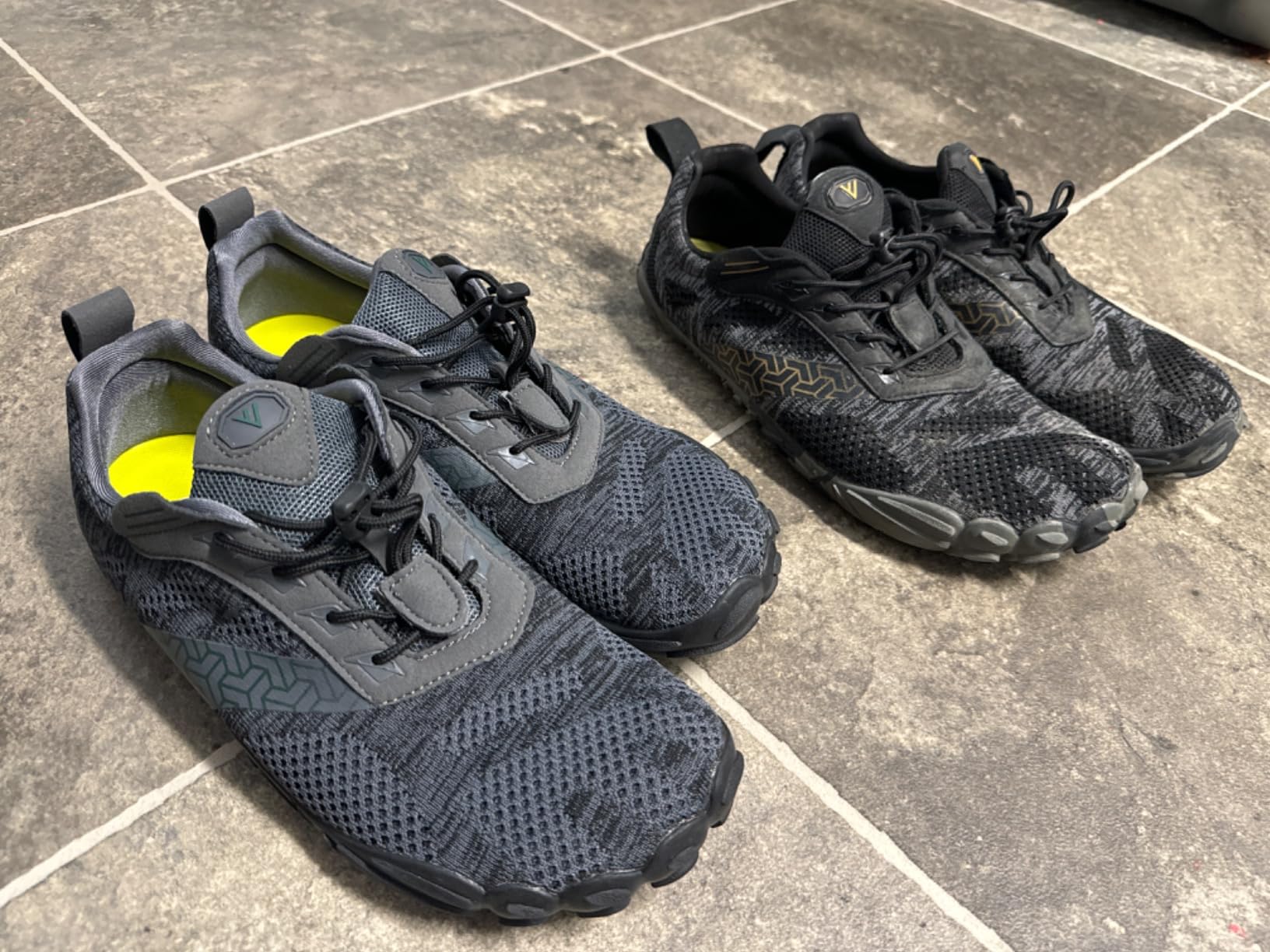
Outsole wear is the most visible change. The tread depth started at approximately 3mm (measured with calipers) and has worn to about 1.5mm after 200 miles. The wear pattern is even across the forefoot with slightly more degradation on the lateral edge where my gait naturally strikes. At this rate, I estimate these will reach end-of-life around 400 miles total when the tread becomes too shallow for trail grip.
The upper mesh has held up better than I expected. Two small snags near the right pinky toe from brush contact, but no tears or separation. The material is thin enough that I can still see through it in places, which keeps me cautious around sharp trail obstacles. The breathability remains excellent – these dry within an hour after creek crossings.
Stitching and glue integrity have surprised me. The glued outsole connection shows no separation despite my initial concerns. The stitching around the heel cup and eyelets remains intact. There’s no delamination or structural failure points visible. For budget construction, this is impressive longevity.
The insole (which I removed early on) compressed noticeably during the brief period I used it. The arch support flattened and the heel cushioning packed out. If you’re keeping the insole in, expect to replace it around month 3-4 for maintained comfort.
Comparing to premium brands at same mileage: My Xero Mesa Trail II at 200 miles looked nearly new – minimal outsole wear, upper pristine. The WHITIN shoes show more age but remain functional. Cost per mile so far is $0.22 ($45 / 200 miles), which matches my Merrell Vapor Glove that lasted 500 miles ($110 / 500 = $0.22/mile). If the WHITIN shoes reach 400 miles, that’s $0.11/mile – hard to beat for budget-conscious runners.
Expected total lifespan based on current wear rate: 300-400 miles depending on usage pattern. Gym-primary use with occasional trails could extend to 400+ miles. Trail-primary use with aggressive terrain might cut it to 300 miles. The outsole will be the limiting factor, not upper failure.
My Overall Assessment
Category Breakdown
Overall Score: 7.2/10
This score reflects strong value for specific use cases but notable limitations for others. Here’s the detailed breakdown:
- Design & Aesthetics: 7.0/10 – Simple, functional minimalist design with multiple colorways available. Nothing flashy, but appropriate for gym and casual wear. Loses points for basic lacing system and exposed glue at edges.
- Initial Comfort: 6.5/10 – Decent once dialed in, but the sizing confusion (insole in vs. out changes fit substantially) and minimal padding meant adjustment period. No break-in needed, but adaptation to zero drop required weeks.
- Trail Performance (Dry): 7.5/10 – Solid for the budget category with good ground feel and adequate traction on packed surfaces. Wide toe box provided stability. Limited by heel lockdown issues and minimal rock protection, but functional for recreational trail running in good conditions.
- Trail Performance (Wet/Technical): 4.5/10 – Major limitations. Shallow lugs couldn’t grip wet rocks or mud. Safety concerns on technical terrain due to poor traction and heel slippage. This is where the budget construction shows most clearly versus $110 trail shoes.
- Gym/Lifting Performance: 8.5/10 – Best use case discovered during testing. Zero drop platform, wide stable base, and firm sole create ideal lifting shoe characteristics. Outperformed my Nike Metcons for strength work. Loses half point for weight during conditioning work.
- Durability: 7.0/10 – Surprisingly good for the price point. Expected failure by month 3 didn’t happen. Outsole wearing as expected, upper held up better than anticipated. Glued construction hasn’t failed. Won’t match premium brand longevity but exceeds budget category expectations.
- Value for Money: 8.5/10 – At $40-45, hard to beat if your use case aligns (gym-primary, casual trail, barefoot experimentation). The cost per mile is competitive with $110 shoes due to replacement frequency versus price. Exceptional value for right buyer, but not versatile enough for everyone.
- Barefoot Transition: 7.5/10 – Good entry point with removable insole offering flexibility. Can transition gradually (keep insole initially) or go full minimalist (remove immediately). Loses points for insole contradiction in marketing. Budget price lowers risk for barefoot experimentation.
What Others Say
I’m not the only one who’s found these shoes polarizing. In my local running group, two people own them. One loves them for gym use exclusively and agrees the wide toe box is exceptional. The other tried them for serious trail running and returned them after wet-traction issues on their first technical outing.
Online review patterns across Amazon and barefoot forums show consistent themes: People praise the value, wide toe box, and gym performance. Common complaints focus on heel lockdown (confirming my findings), wet traction (widely agreed limitation), and sizing confusion around the insole (a legitimate source of frustration).
Where I disagree with some community opinions: Several reviewers call these “great trail shoes.” Based on 200+ miles of testing, I’d revise that to “adequate dry trail shoes, excellent gym shoes.” The marketing as trail-primary is misleading – these succeed by finding a niche in gym/casual use rather than excelling at technical trails.
The durability reports vary wildly from “lasted 2+ years” to “fell apart in 6 months.” My hypothesis: Usage intensity and user weight significantly impact lifespan. Lighter users (under 160 lbs) doing primarily gym work might see 2+ years. Heavier users (180+ lbs) running aggressive trails might see 6 months. My 200 miles at 180 lbs with mixed usage represents a middle case.
Is It Worth Your Money?
Value extends beyond sticker price. Let’s look at the full financial picture.
At $45 average price with an estimated 300-400 mile lifespan, the cost per mile runs $0.11-0.15. Compare that to:
- Xero Mesa Trail II: $110, approximately 800 miles expected = $0.14/mile
- Merrell Vapor Glove: $110, approximately 500 miles observed = $0.22/mile
- Vivobarefoot Primus Trail: $150, approximately 1000 miles reported = $0.15/mile
On a cost-per-mile basis, the WHITIN shoes are competitive if they reach 400 miles. But this metric only matters if the shoe meets your needs. A bargain that doesn’t fit your use case is still money wasted.
Value by use case:
Gym primary + occasional trail: EXCELLENT (9/10 value) – This is where these shoes shine. The $40 price point gets you a lifting shoe that outperforms $130 dedicated trainers for strength work, plus casual trail capability. The limitations (wet traction, heel lockdown) matter less in a gym environment. If 70%+ of your usage is gym-based, this is exceptional value.
Recreational dry trail running: GOOD (7.5/10 value) – For runners logging 10-15 miles per week on maintained trails in good conditions, these offer solid value. You’re not getting premium performance, but you’re saving $70 versus Xero. If trails are your hobby rather than passion, and you stick to dry groomed surfaces, the budget approach works.
Technical trail running: POOR (4/10 value) – Even at $40, these aren’t the right tool. The wet-traction limitations and heel lockdown issues create safety concerns on technical terrain. Spending $110 on Xero Mesa Trail II delivers substantially better performance in challenging conditions. False economy to buy cheap shoes that can’t handle the terrain you actually run.
Barefoot transition experimentation: EXCELLENT (8.5/10 value) – If you’re curious about minimalist running but hesitant to invest $150 in Vivobarefoot, these provide low-risk entry. The removable insole lets you transition gradually. If you discover minimalist running isn’t for you, you’re out $40 instead of $150. If you love it, you can upgrade to premium shoes later with more knowledge about what works for your feet.
Bottom line: Value depends entirely on matching use case to shoe capabilities. For gym-primary users, casual walkers, or barefoot experimenters, this is outstanding bang-for-buck. For serious trail runners, especially in wet climates or technical terrain, spend the extra money on purpose-built shoes.
Final Verdict
The Good and The Bad
| ✅ Pros | ❌ Cons |
|---|---|
| Exceptional value at $40-45 price point | Heel lockdown inadequate for technical descents |
| Extra-wide toe box allows natural toe splay (4.5″ measured) | Wet/muddy traction very limited due to shallow lugs |
| Excellent ground feel and proprioception for minimalist experience | Requires insole removal for true zero drop (contradicts out-of-box marketing) |
| Surprisingly durable for price point (200+ miles, still functional) | Thin upper offers minimal weather protection or abrasion resistance |
| Outstanding for gym/lifting workouts (8.5/10 rating) | Sizing confusion – fit changes dramatically with/without insole |
| Highly flexible sole adapts to terrain naturally | Not suitable for heavier runners (180+ lbs) on rough technical trails |
| No break-in period needed | Heel slippage during casual walking and technical descents |
| Removable insole offers customization and gradual transition option | Basic lacing system with limited adjustability for different foot volumes |
| Multiple colorways available for personal preference | Heavier than premium competitors (14oz vs 7-9oz) |
| Breathable mesh keeps feet cool in hot conditions | Minimal arch support even with insole (pro or con depending on preference) |
Who Should Buy the WHITIN Minimalist Trail Running Shoes?
✅ HIGHLY RECOMMENDED IF:
- Your primary activity is gym workouts/CrossFit/weightlifting – This is the best use case. The zero drop platform, wide stable base, and firm sole make these exceptional for lifting at a fraction of the cost of dedicated training shoes.
- You want to experiment with barefoot/minimalist shoes without $110+ investment – At $40, the risk is low if you discover minimalist running isn’t for you. The removable insole offers gradual transition flexibility.
- You have wide feet and struggle with narrow trail shoes – The 4.5-inch toe box is genuinely extra-wide and accommodates bunions, natural toe splay, and wide feet comfortably. Few shoes at any price offer this much width.
- You run dry, non-technical trails recreationally (10-20 miles/week max) – For maintained gravel paths or smooth single track in good weather, these perform adequately at huge cost savings versus premium options.
- You’re under 160 lbs and prioritize ground feel over cushioning – Lighter runners experience less impact force, reducing the importance of rock protection and cushioning that heavier runners need.
- You need a backup/rotation shoe for easy trail days – If you own premium trail shoes for hard efforts but want an affordable option for recovery runs or casual hikes, these fill that role effectively.
⚠️ PROCEED WITH CAUTION IF:
- You run 20+ miles per week on trails – Durability at high mileage is uncertain. Budget construction might not hold up to serious training volume over time.
- You’re transitioning from traditional cushioned shoes – The adaptation to zero drop requires patience and gradual progression. Start very gradually with short distances to avoid injury.
- You need one versatile shoe for multiple sports – While marketed as versatile, these make compromises in each category. Performance varies from 8.5/10 (gym) to 4/10 (wet trails).
- You’re between sizes – The insole in/out dramatically changes fit volume. If you’re between sizes, the fit challenge multiplies since you’ll need different sizes depending on insole use.
❌ LOOK ELSEWHERE IF:
- You run technical, rocky trails regularly – The minimal rock protection and shallow lugs create safety concerns. Insufficient traction and protection for aggressive terrain.
- You run in wet/muddy conditions frequently – Traction is inadequate on wet surfaces. Multiple slipping incidents during testing. Not worth the injury risk.
- You’re 180+ lbs and need more support/cushioning – At 180 lbs, I was pushing the comfortable limit on rocky trails. Heavier runners will find these too minimal for impact protection.
- You need reliable heel lockdown for steep descents – The shallow heel cup and heel slippage issue is a major weakness that can’t be fixed with lacing techniques. Deal-breaker for technical descents.
- You have narrow or low-volume feet – The extra-wide toe box will feel sloppy and unstable. Narrow-footed runners will experience a “swimming” sensation and poor fit.
- You want premium durability and construction – Budget materials show in the thin upper, exposed glue, and softer rubber compound. These won’t last as long as $110 shoes.
- You have plantar fasciitis or need arch support – Even with the insole, arch support is minimal. The flat platform is too aggressive for those needing structured support.
Better Options for Specific Needs
If the WHITIN shoes don’t match your use case, here are targeted alternatives:
- For serious trail runners: Xero Mesa Trail II ($110) – Better traction with deeper lugs, superior heel lockdown, more durable construction. Worth the investment if trails are your primary activity.
- For gym-primary users on tighter budget: Keep the WHITIN. This is genuinely the best value for lifting and functional fitness at $40. Hard to recommend spending more for this specific use case.
- For wide feet + premium quality: Altra Lone Peak ($140) – Similar toe box width but with more cushioning. Zero drop with better trail protection. If you need wide toe box but want premium performance.
- For true barefoot purists: Xero HFS II ($90) or Vivobarefoot Primus Lite ($130) – More refined minimalist design, lighter weight, better construction quality. If barefoot is your lifestyle, not just experiment.
- For wet conditions: Merrell Trail Glove ($110) – Significantly better traction pattern designed for variable conditions. If you run year-round or in wet climates.
- For heavier runners: Altra Escalante ($130) – More cushioning while maintaining zero drop and wide toe box. Better impact protection for runners over 180 lbs.
My Final Take
After 6 months and 200+ miles, the WHITIN Men’s Minimalist Trail Running Shoes succeeded by finding their niche rather than trying to be everything to everyone. They’re not the trail-primary shoes the marketing suggests. They’re gym-primary shoes that can handle easy trails in dry conditions.
The surprise discovery – that these perform best in the gym rather than on technical trails – actually validates the value proposition. At $40, you’re getting an excellent lifting shoe with barefoot characteristics that happens to work for casual trail running. Reframe the expectation from “budget trail shoe that can do gym work” to “budget gym shoe that can do some trails,” and the value becomes clear.
Durability better than expected challenges my assumptions about budget footwear. These haven’t fallen apart despite thin materials and glued construction. The 200-mile mark usually reveals construction failures in poor-quality shoes – these are still going. Will they last 800 miles like Xero? No. But they might reach 400 miles, which delivers cost-per-mile competitive with premium brands.
The major limitation – must match use case carefully – isn’t unique to these shoes, but it’s more pronounced given the performance spread (8.5/10 gym, 4/10 wet trails). These aren’t versatile enough to be your only athletic shoe unless your activities align perfectly with their strengths.
Pro tips if you buy these:
- Remove insole immediately, try fit, decide which works for you – Don’t wait. The fit changes so dramatically that you need to establish your preference early and size accordingly.
- Size up 0.5 if going sockless or keeping insole – The wide toe box is generous, but forefoot and midfoot fit true to size. Extra half size accommodates volume changes.
- Use heel lock lacing technique for better lockdown – Won’t eliminate heel slippage completely but reduces it from 1/4 inch to 1/8 inch movement. YouTube has good tutorials.
- Rotate with another pair for longevity – Don’t make these your only shoe. Alternating extends lifespan and allows comparison to remind you what’s normal.
- Treat these as gym-primary, trail-secondary shoes for best results – Set proper expectations. They excel in the gym and work for easy trails, not the reverse.
My personal verdict: I’m keeping these in rotation specifically for gym workouts and easy trail days, but I reach for my Xero Mesa Trail II when trails get serious. After 200 miles, I’d buy them again knowing what I know now – but only because my usage pattern aligns with their strengths. At $40, they’ve earned their spot in my shoe rotation despite the compromises.
Frequently Asked Questions
How long do these actually last?
Based on my 6-month, 200-mile testing, I estimate 300-400 miles total lifespan depending on usage pattern. The outsole will be the limiting factor – tread depth has worn from 3mm to 1.5mm in 200 miles. At this rate, it’ll be too shallow for trail grip around 400 miles. The upper has held up surprisingly well with only minor snags.
Longevity varies significantly by user weight and activity type. Gym-primary use at under 160 lbs might extend to 500+ miles. Heavy trail running at 180+ lbs might cut it to 300 miles. The softer rubber compound wears faster on pavement than trails – my 30 road miles showed more wear than 170 trail miles.
Compare to premium brands: My Xero Mesa Trail II is rated for 800+ miles. My Merrell Vapor Glove lasted 500 miles. The WHITIN won’t match premium durability, but cost-per-mile stays competitive due to lower initial price. At $0.11-0.15 per mile (if reaching 300-400 miles), that’s similar to $0.14-0.22 per mile for competitors.
Are these true zero drop or is that misleading?
It’s conditional. Out of the box with the included insole, these are NOT zero drop – I measured 3.8mm heel elevation with calipers. The insole adds arch support and heel lift that contradicts barefoot design. Remove the insole, and you get true 0mm drop with a flat platform.
This creates biomechanical implications. With insole in, you’re closer to a 3-4mm drop shoe similar to many road trainers – less aggressive transition for beginners. With insole out, it’s true zero drop requiring calf and Achilles adaptation. I removed the insole after week one and experienced 4 weeks of calf soreness despite my experience with minimalist shoes.
My recommendation: Beginners keep insole in initially for gradual transition. After 4-6 weeks, remove insole to progress to true zero drop. Experienced minimalist runners can remove immediately but expect re-adaptation period. The marketing should clarify “0mm drop capable with insole removed” rather than implying zero drop out of box.
How wide is the toe box really? Will it work for my bunions/wide feet?
The toe box is genuinely extra-wide – I measured 4.5 inches across at the widest internal point. For context, my Xero Mesa Trail II measures 4.1 inches, Merrell Vapor Glove is 3.8 inches, and traditional running shoes are typically 3.5-3.7 inches. That extra width is substantial and noticeable.
During 200+ miles, my toes never pinched or felt constricted. I experienced natural toe splay during all activities – running, gym work, walking. Friends with bunions tried these and reported no pressure on the bunion area, which is rare in athletic footwear. The foot-shaped design (wider at toes than heel, unlike traditional taper) accommodates natural foot anatomy.
Who will benefit: Wide feet, bunions, hammer toes, anyone who’s felt squeezed in traditional shoes. Who might find it excessive: Narrow or low-volume feet will feel sloppy. One friend with narrow feet described “swimming” in these despite sizing down. The extra width that’s a blessing for wide feet becomes a curse for narrow feet. If you’re regular width, it’ll feel roomy but not unstable.
Can I really run trails in these or are they just glorified gym shoes?
Nuanced answer: You CAN run trails in these, but with significant limitations. They work for dry, non-technical trails – groomed gravel paths, smooth single track, rolling terrain without technical features. I logged 170 trail miles mostly on Silver Comet Trail (gravel) and North Georgia smooth single track without major issues.
They DON’T work for: Wet rocks (multiple slipping incidents), muddy conditions (shallow lugs clog and lose grip), technical descents (heel slippage kills confidence), sharp rocky terrain (minimal rock protection causes foot bruising). Session 8 at Kennesaw Mountain post-rain was the turning point – I slipped on wet granite and relegated these to dry-condition use only.
Honest assessment: These are actually gym shoes that CAN handle easy trails, not trail shoes that can do gym work. The marketing emphasizes trail capability, but after 200 miles, I grab these for the gym 70% of the time and easy trails 30%. If your trail running involves maintained paths in good weather, they’ll work. If your trails are technical, wet, or challenging, invest in purpose-built trail shoes like Xero Mesa Trail II or Merrell Trail Glove.
What’s the break-in period and will they hurt my calves?
There’s essentially zero break-in for the shoe itself – they felt the same on run 50 as run 1. The upper doesn’t need softening, and the sole doesn’t need breaking in. But that’s different from BODY adaptation to zero drop.
Week-by-week adaptation timeline (with insole removed for true zero drop): Week 1 – Calves on fire after 3 miles, noticeable soreness for days after. Week 2 – Reduced distance to 2 miles, added calf raises and toe walks daily, continued soreness. Week 3 – Progressed to 3-4 miles, soreness decreasing but still present on descents. Week 4 – Back to 5 miles, calves adapted, stride feeling natural again.
Warning signs of over-doing it: Sharp pain (not soreness) in calves or Achilles, pain that doesn’t resolve with rest, changes in gait to compensate. If you experience these, you’re progressing too fast. Strengthening exercises that help: Calf raises (both bent and straight knee to target gastrocnemius and soleus), toe walks, eccentric calf lowering, ankle circles.
Keep the insole IN initially if you’re new to minimalist shoes. It provides 3-4mm elevation that eases the transition. Remove it after 4-6 weeks once adapted. If you’re already experienced with zero drop, you can remove immediately but still expect 2-3 week adaptation as I experienced.
Should I remove the insole or keep it in?
Depends on your goals and foot volume needs. Pros of removing: True zero drop (0mm platform), more barefoot feel, better ground connection, no arch support interference. Cons of removing: Looser fit (more volume in shoe), requires sizing adjustment, aggressive adaptation required.
Pros of keeping insole: Gentler transition with 3-4mm drop, better fit for some foot volumes, slight arch support, more beginner-friendly. Cons of keeping: Not truly zero drop despite marketing, arch support contradicts barefoot philosophy, compresses over time requiring replacement.
My recommendation: Try both. Remove insole, walk around, assess fit and comfort. If it feels too loose or you’re concerned about zero drop adaptation, keep it in initially. If you want true minimalist experience and fit works, remove it immediately. I removed mine after week one and sized up 0.5 to accommodate the extra volume.
Alternative insole options: If you remove the stock insole but want slight cushioning without arch support, consider flat aftermarket insoles like Xero FeelTrue or Naboso. These add protection without compromising zero drop. Cost $20-30 but maintain barefoot principles better than stock insole.
How do they compare to Xero Shoes / Merrell Vapor Glove for someone on a budget?
I own both Xero Mesa Trail II ($110) and Merrell Vapor Glove 3 ($110), so I can compare directly. Where WHITIN wins: Price ($40 vs $110), toe box width (4.5″ vs 4.1″ Xero, 3.8″ Merrell), gym performance (WHITIN 8.5/10 vs Xero 7/10, Merrell 7.5/10). The extra width and stable platform work better for lifting.
Where WHITIN loses: Weight (14oz vs 9.9oz Xero, 7oz Merrell – noticeable difference by mile 10), traction (Xero has 4mm lugs vs WHITIN’s 2mm – huge difference in wet conditions), durability (Xero rated 800 miles vs WHITIN’s estimated 400), construction quality (Xero stitched vs WHITIN glued, Merrell more refined), heel lockdown (both Xero and Merrell have better heel cups).
Who should spend extra $70 on Xero: Serious trail runners logging 20+ miles/week, runners in wet climates, anyone prioritizing technical trail capability, those wanting multi-year durability. The Xero is purpose-built for trails and performs substantially better in challenging conditions.
Who should save money with WHITIN: Gym-primary users who want occasional trail capability, barefoot experimenters testing the category before serious investment, runners on maintained trails in good weather, anyone prioritizing wide toe box over performance. At $40, it’s low-risk entry.
The $70 difference matters: That’s 3-4 months of gym membership or two pairs of WHITIN shoes. If your usage aligns with WHITIN’s strengths, save the money. If you’re pushing into technical terrain or high weekly mileage, the premium options deliver meaningfully better performance worth the investment.
Will these work for heavier runners (200+ lbs)?
At 180 lbs, I was approaching the comfortable limit on technical trails. The minimal cushioning (8mm stack without insole) provided little impact protection on rocky terrain. By mile 8 of technical runs, my feet felt bruised from rock impacts. On smooth trails, the 8mm stack was adequate for my weight, but barely.
For runners 200+ lbs, I have concerns: Impact forces increase with weight, and 8mm of cushioning may not provide sufficient protection. Injury risk increases – stress fractures, plantar fasciitis, and foot bruising become more likely with insufficient cushioning. The thin upper and softer rubber compound may wear faster under heavier loads. Budget construction might fail earlier under higher stress.
Alternative recommendations for heavier runners: Altra Escalante ($130) – zero drop with more cushioning (25mm stack), wide toe box, better for higher impact forces. Altra Lone Peak ($140) – trail-specific with 25mm cushioning, maintains zero drop and wide toe box. Topo Athletic Ultraventure ($140) – 28mm stack, more protection while keeping natural positioning.
If you’re 200+ lbs and want to try minimalist running, consider this a progression target rather than starting point. Build foot strength with these for gym work and short casual walks, but run in more cushioned zero drop shoes initially. Transition to minimal cushioning after months of adaptation.
Can I use these for hiking with a backpack?
I tested these on day hikes without heavy loads – 15-20 lb daypack maximum. Performance was acceptable for maintained trails under these conditions, but concerns emerged. The minimal cushioning means foot fatigue increased faster with pack weight. Ankle support is nonexistent (low-cut design), increasing risk on uneven terrain. Heel slippage became more problematic with pack weight pulling backward on descents.
Load-bearing concerns: The thin upper provides no structure for lateral stability with pack weight. The softer rubber compound might compress more under load, reducing ground clearance and increasing stumble risk. Traction limitations (shallow lugs, poor wet grip) become more dangerous when carrying weight – falling with a pack creates more injury risk.
Better alternatives for hiking with backpack: Merrell Moab 2 ($110) – dedicated hiking boot with ankle support and structure. Salomon X Ultra 4 ($140) – mid-cut design with proper load-bearing capability. For lightweight backpackers preferring minimal shoes: Xero Mesa Trail II ($110) has better traction and heel lockdown while maintaining minimalist design.
Maybe okay for: Day hiking without heavy loads on maintained trails in good weather. Short approaches to climbing areas. Casual nature walks with small hydration pack. Not appropriate for: Multi-day backpacking with full pack, technical trail hiking, approaches requiring scrambling, winter hiking with traction devices.
What’s the best way to solve the heel slippage issue?
I tried multiple solutions during 200 miles of testing. Heel lock lacing technique helped most – creates extra friction around ankle to reduce movement. To execute: Skip the top eyelet, create loops on each side, thread opposite laces through loops, pull tight, tie normally. This reduced heel movement from 1/4 inch to 1/8 inch for me. YouTube search “heel lock lacing” shows visual tutorials.
Sizing considerations: I tried sizing down from 11 to 10.5 thinking tighter overall fit would help heel. Result: Toe box became too tight (losing the main benefit), but heel slippage remained. The shallow heel cup design is the root cause – no amount of sizing adjustment fixes it. I returned to size 11 and accepted the trade-off.
Heel grip pads as bandaid solution: Adhesive pads that stick inside heel cup to increase friction. Available at running stores for $5-10. I tested these – they helped slightly but tended to peel off after sweaty gym sessions. Requires replacing every 2-3 weeks. Only worth it if you’re committed to making these work.
When it’s a deal-breaker vs manageable: For technical descents and serious trail running, heel slippage is a safety issue – not worth fighting. For gym work, flat walking, easy trails, it’s annoying but not dangerous. The heel stays mostly planted during lifts and level terrain, so the shallow cup matters less. If your primary use case involves steep descents or aggressive trail running, this is unfixable and you should choose different shoes.
Review Scoring Summary & Shoe Finder Integration
| Target Gender | Men (women’s version available separately) |
| Primary Purpose | Sport (trail/gym hybrid, best for gym-primary use) |
| Activity Level | Moderate (recreational athletes, 10-20 miles/week maximum) |
| Budget Range | Budget (Under $50 – exceptional value for price point) |
| Brand | WHITIN (budget minimalist footwear brand) |
| Primary Strength | Value (price-to-performance ratio unmatched for specific use cases) |
| Expected Lifespan | Medium-term (6-12 months depending on usage, 300-400 miles estimated) |
| Foot Characteristics | Wide (perfect for wide feet/bunions, too voluminous for narrow feet) |
| Usage Conditions | Dry (indoor gym or dry trail optimal, avoid wet/muddy conditions) |
| Daily Wearing Time | Short (sport sessions and errands, not all-day wear) |
| Style Preference | Sporty/minimalist (functional design, multiple colorways, understated aesthetic) |
| Important Features | Wide toe box (4.5″), zero drop (with insole removed), flexible sole, breathable mesh, removable insole for customization |
| Comfort Score | 6.5/10 – Decent once dialed in but requires size/insole experimentation. Zero break-in but zero drop adaptation needed. Minimal padding means not plush comfort. |
| Style Score | 6.5/10 – Functional minimalist aesthetic works for gym and casual wear. Multiple colors available but basic design with exposed glue at edges. Not fashion-forward. |
| Overall Score | 7.2/10 – Strong value for gym-primary users and barefoot experimenters. Limitations in wet trail conditions and versatility prevent higher score. Buy for the right use case. |
Bottom Line Assessment
- Maybe consider if: You primarily work out in the gym and want occasional trail capability, you’re experimenting with minimalist footwear on a budget, you have wide feet or bunions, you run maintained trails in dry conditions recreationally.
- Decent for: CrossFit and weightlifting (8.5/10), casual walking and daily wear (7.5/10), dry groomed trail running (7.5/10), barefoot transition experimentation (7.5/10).
- Skip if: You run technical trails regularly, you encounter wet/muddy conditions frequently, you’re over 180 lbs and need more cushioning, you need reliable heel lockdown for steep terrain, you have narrow feet.
- Best feature: Extra-wide toe box (4.5″ measured) combined with budget price creates exceptional value for wide-footed gym users and barefoot experimenters.
- Biggest weakness: Heel lockdown inadequacy limits technical trail capability and creates safety concerns on steep descents. Shallow heel cup design can’t be fixed with sizing or lacing.
Final verdict after 6 months and 200+ miles: The WHITIN Men’s Minimalist Trail Running Shoes succeed by finding a specific niche – gym-primary use with casual trail capability – rather than excelling as versatile athletic shoes. At $40-45, they deliver outstanding value if your use case aligns with their strengths. The extra-wide toe box, zero drop capability, and surprising durability make them worthwhile for the right buyer. But wet-traction limitations, heel slippage, and narrow performance specialization mean they’re not the one-shoe solution for everyone.
I’m keeping these in my rotation for gym workouts and easy trail days where they excel. For technical trails or challenging conditions, I reach for my Xero Mesa Trail II. After 200 miles of real-world testing, I’d buy them again – but only because I now know exactly when to wear them and when to leave them home.
Questions about whether these will work for your specific situation? Feel free to reach out. Stay grounded out there.
Reviews
There are no reviews yet.